Cucamonga Peak
At a Glance
- Route
- Icehouse Canyon Trail
- Trailhead
- Icehouse Canyon
- Permit
- Adventure Pass required for parking; wilderness permit for the Cucamonga Wilderness
- Typical Season
- Spring through fall; avoid after fresh snow without proper gear
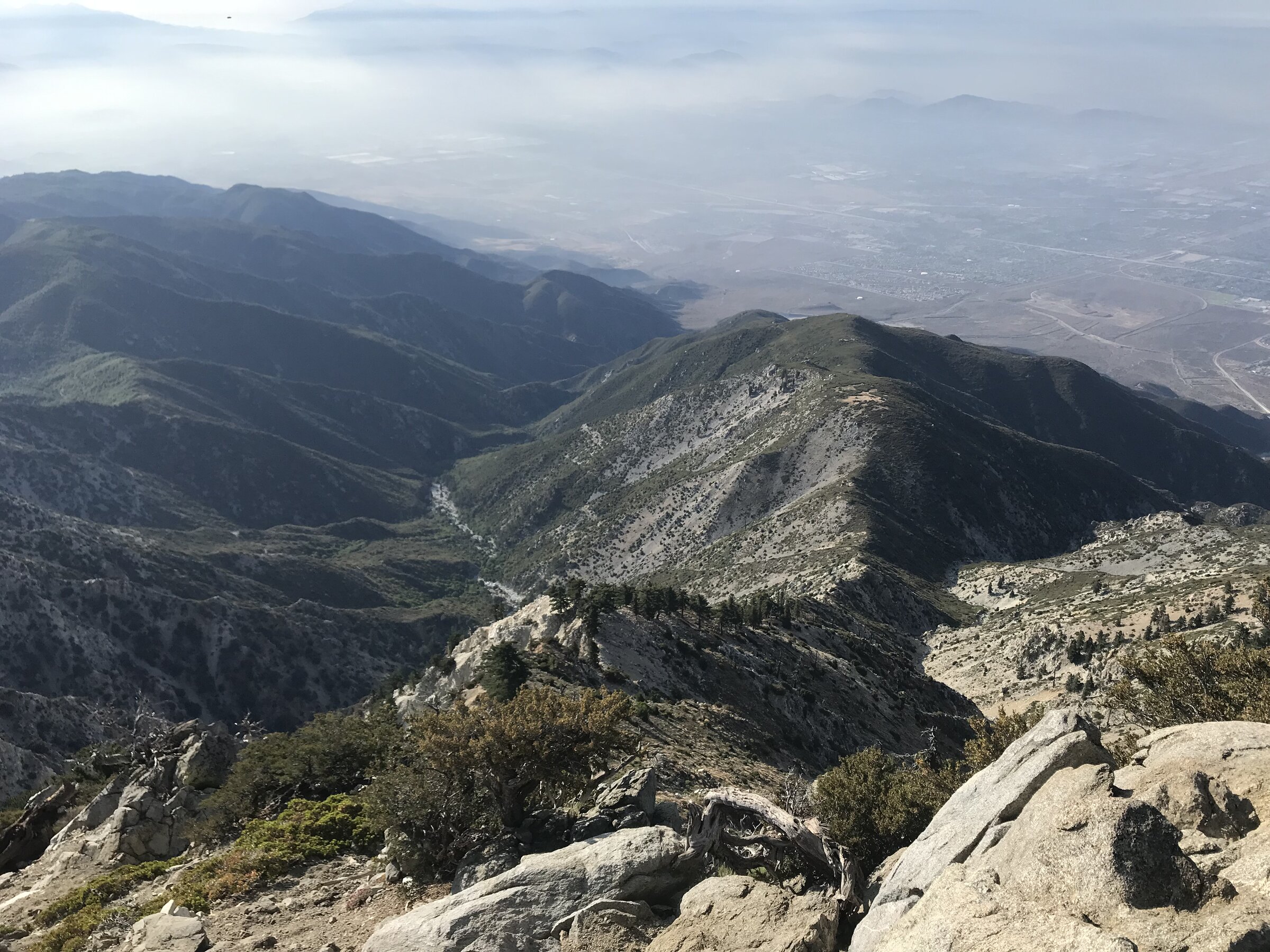
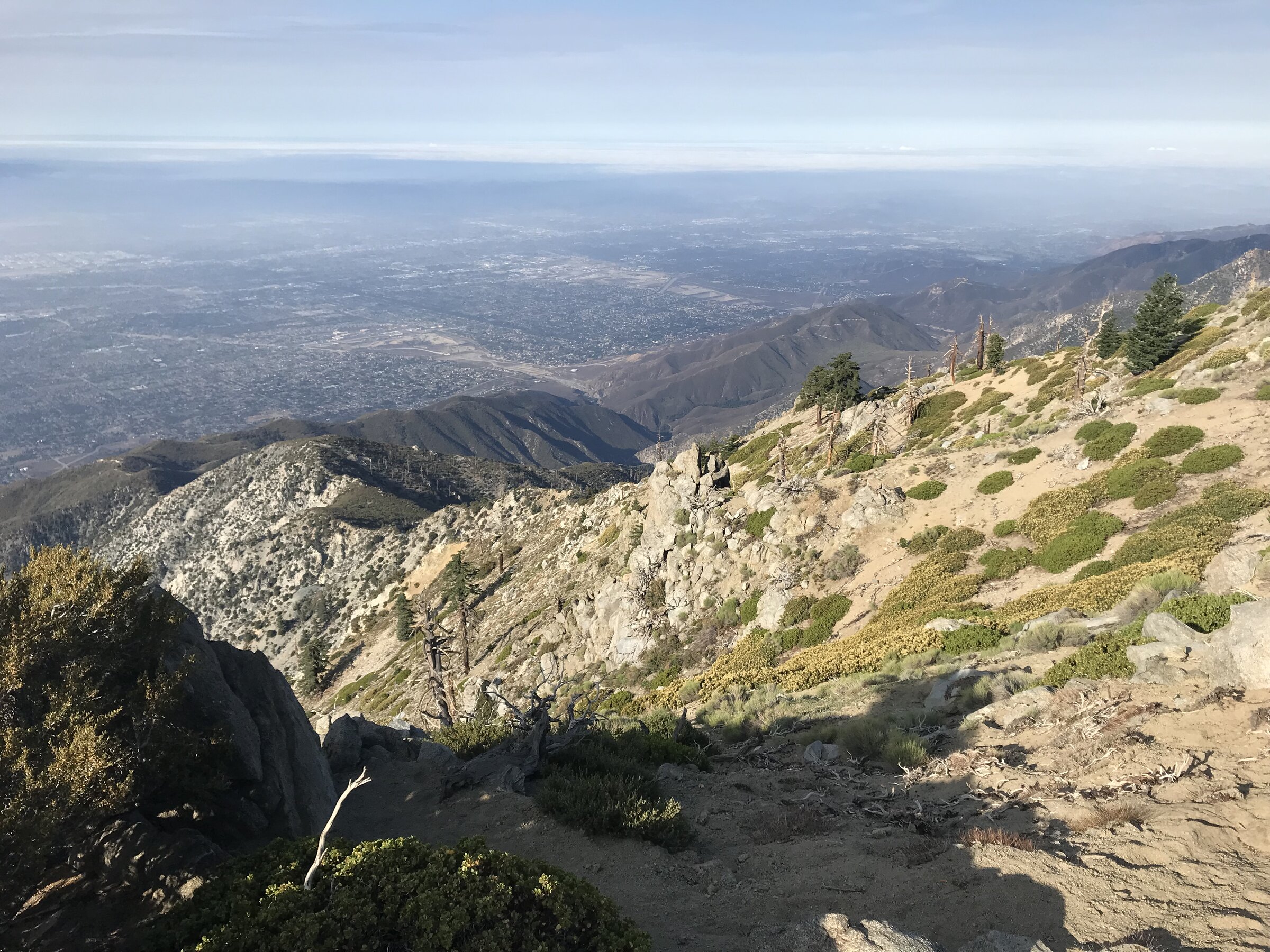
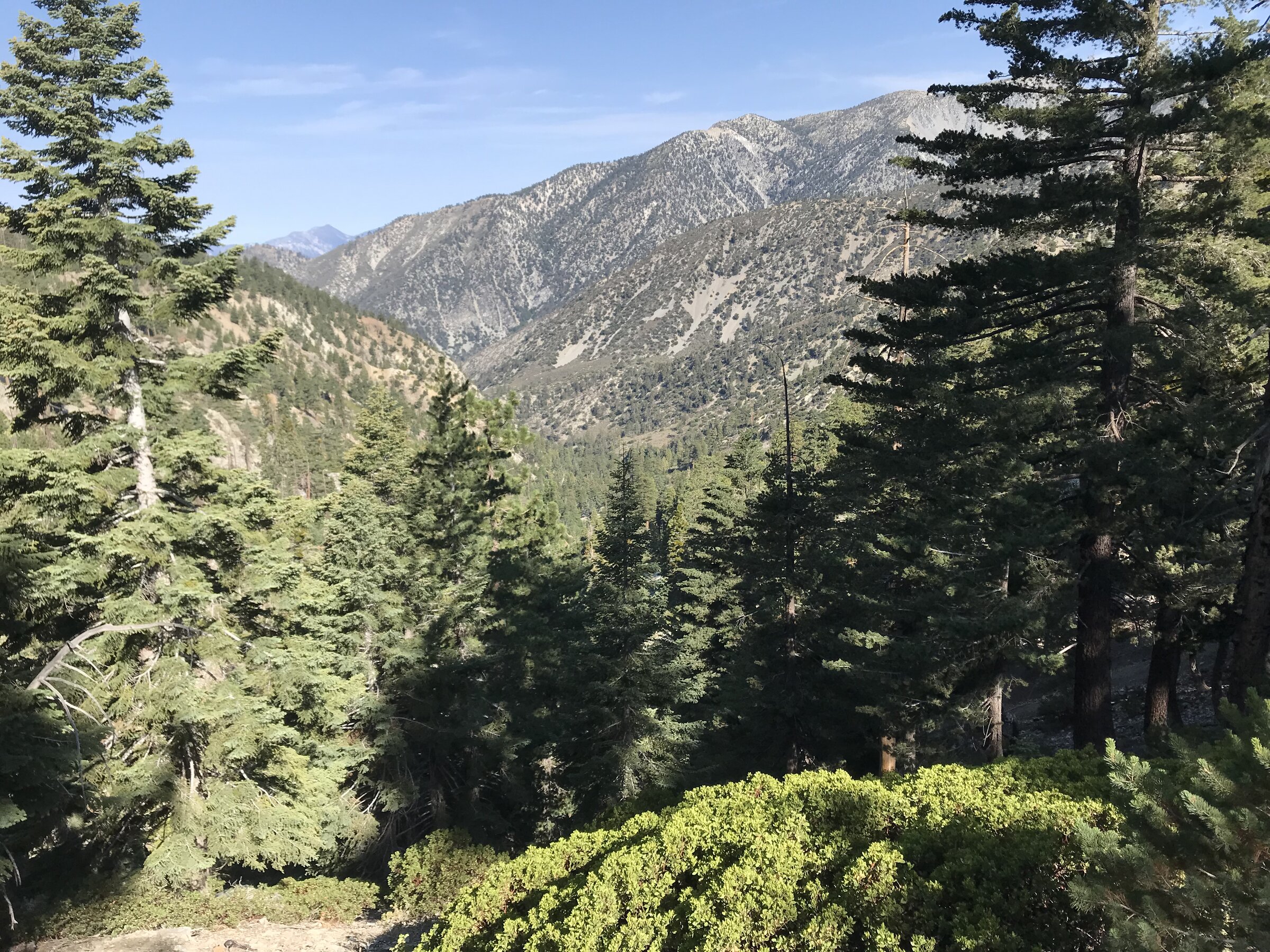
Cucamonga Peak sits above the cities it's named for, and the approach up Icehouse Canyon makes that contrast obvious almost immediately. The trail starts among cabins and a creek in the shade of the canyon, climbs through the Cucamonga Wilderness boundary, and by the time you're up on the ridge near the summit, the trees thin out and the Inland Empire is laid out below in a wide, hazy sprawl that never really goes away for the rest of the hike.
The route to Icehouse Saddle is a well-graded, steady climb, but the final stretch up to the peak drops the switchbacks entirely and just goes straight up for the last mile or so. It's not technical, just relentless — the kind of climb that reminds you exactly why this is used as a training hike for bigger mountains. Bighorn Peak and Ontario Peak are visible on the way, and the higher you get, the more the view opens up toward San Antonio, San Gorgonio, and San Jacinto.
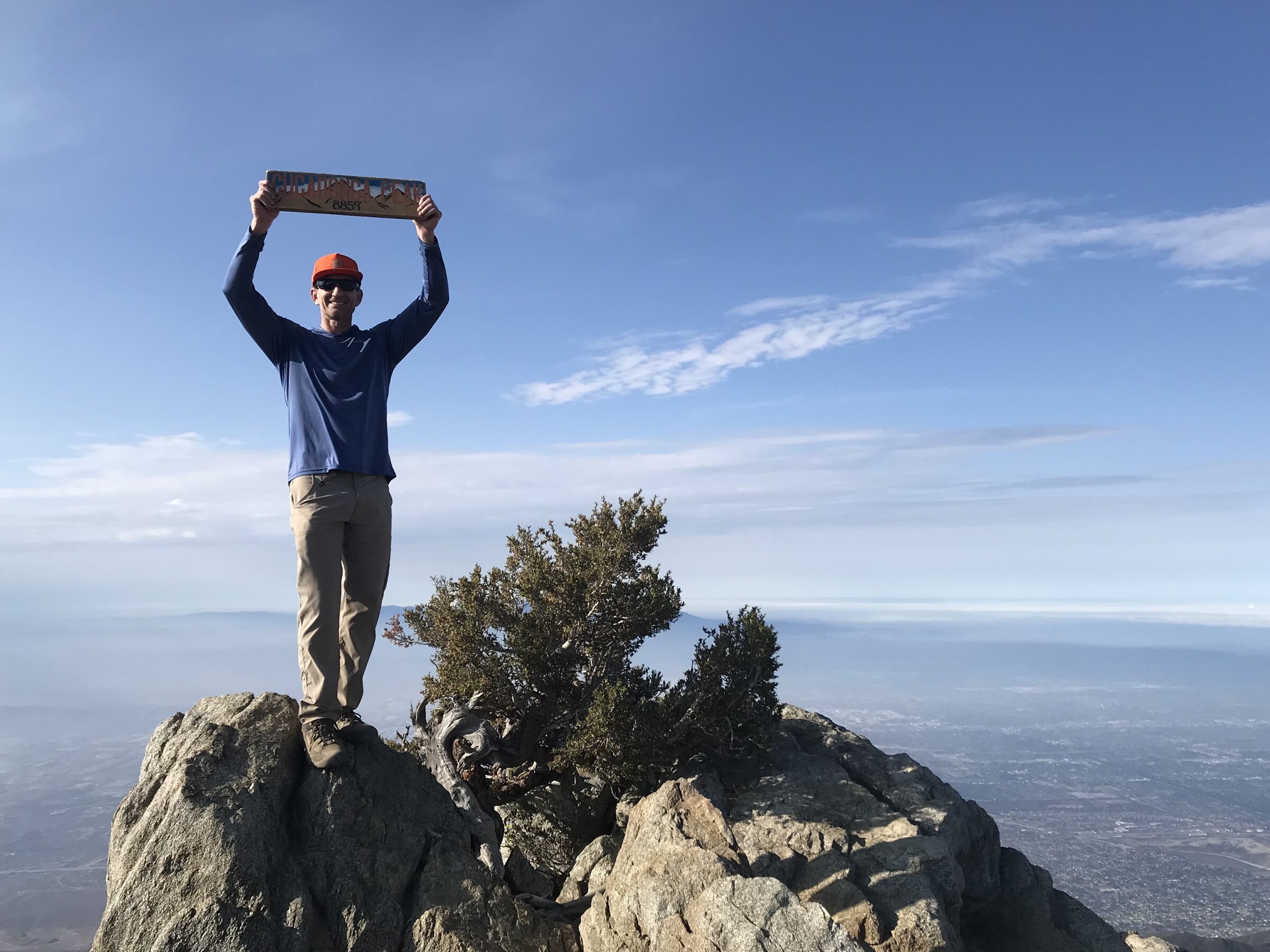
The true summit is a short scramble past the first viewpoint most people stop at, out onto a rockier outcrop with wind-twisted junipers growing out of the granite. There's a wooden elevation sign up there that everyone takes a turn holding overhead for the summit photo, and it's worth the extra few minutes to find it. From the top, the view is almost entirely unobstructed — no other range blocking the Inland Empire below, just ridgelines falling away in every direction and the valley floor disappearing into the haze.
Photos
Comments